Maybe you've noticed more hair in the shower drain. Your part looks a little wider. Your ponytail feels thinner than it used to. And it's hard not to worry.
If that's you, you're not alone. Hair loss isn't just a men's issue. About 1 in 4 women notice thinning by age 50, and in one study of postmenopausal women, more than half had some degree of female pattern hair loss. Most of those women also reported lower self-esteem because of it.
The frustrating part is that thinning hair often gets brushed off as "just aging." But hair is often a window into what's happening inside your body. And when you find the real cause, you have a much better chance of turning things around.
Key Takeaways
- Common causes of thinning hair in women include hormone shifts, thyroid problems, low iron, stress or illness, rapid weight loss and genetics, and often more than one at once.
- Stress or illness can trigger shedding (telogen effluvium) about 2 to 3 months later. It's usually temporary.
- Minoxidil is the only medication FDA approved to treat female pattern hair loss.
- TED is an FDA-cleared, needle-free hair restoration treatment that tends to work best in early thinning and alongside treating the root cause.

What's Behind Thinning Hair?
Hormone changes. Estrogen helps keep hair in its growing phase longer. As estrogen drops in perimenopause and menopause, the effect of androgens (like testosterone) on hair follicles becomes stronger, which can shrink follicles and thin the hair, especially along your part and on top of your head. Conditions like PCOS can cause similar changes at younger ages. See PCOS and insulin resistance.
Thyroid problems. Both an underactive and an overactive thyroid can cause hair to thin or shed. Read more in What Standard Thyroid Testing Misses.
Low iron. Your hair follicles need iron to grow healthy hair. Low iron stores are a common, and very fixable, contributor to shedding in women, especially those with heavy periods.
Stress, illness, or a big life event. A major stressor like surgery, illness, childbirth, or intense emotional stress can push lots of hairs into their resting phase at once. This is called telogen effluvium, and the shedding usually shows up about 2 to 3 months later. The good news is that it's usually temporary.
Rapid weight loss. Losing weight quickly can trigger that same temporary shedding. In one analysis, people who lost more than 20% of their body weight reported hair loss about twice as often as those who lost less. Getting enough protein and nutrients can help. See why protein matters on a GLP-1.
Genetics. If your mom or grandmother had thinning hair, you may be more likely to experience it too.
And often, it's not just one thing. Low iron, hormone shifts, and stress can all stack on top of each other.
How We Find the Cause
Because so many things can affect your hair, treating it without knowing why it's happening is a little like guessing. At Abbott, we start with the full picture:
- Your story. When did it start? Is it shedding, thinning, or both? Any recent illness, stress, pregnancy, weight loss, or medication changes?
- A look at the pattern. Thinning along the part looks different from all-over shedding, and that helps point us toward the cause.
- Labs. We commonly check iron stores (ferritin), thyroid function, vitamin D, and hormones, plus other labs based on your symptoms. See what blood tests to get
- Your whole health. Sleep, nutrition, stress, and perimenopause or menopause symptoms all matter.
If we find something like low iron or a thyroid issue, treating it can make a real difference. If something more unusual is going on, like patchy hair loss or a scalp that's red, itchy, or scarring, we'll refer you to a dermatologist.
Treatment Options
The right treatment depends on the cause, and the best results often come from combining a few approaches.
Fix what's underneath. Correcting low iron, treating a thyroid issue, or supporting hormones can help your hair recover from the inside out. Learn about our hormone therapy.
Nutrition. Enough protein, iron, and other key nutrients give your follicles what they need to grow, which is especially important if you're losing weight.
Minoxidil. This is the only medication FDA approved to treat female pattern hair loss. It's available as a liquid or foam, and some providers also prescribe it as a low-dose pill.
Other prescription options. Medications that block the effects of androgens on hair follicles may help some women, depending on their health history.
TED Hair Restoration
At Abbott, our aestheticians also offer TED hair restoration, an FDA-cleared, needle-free treatment for thinning hair.
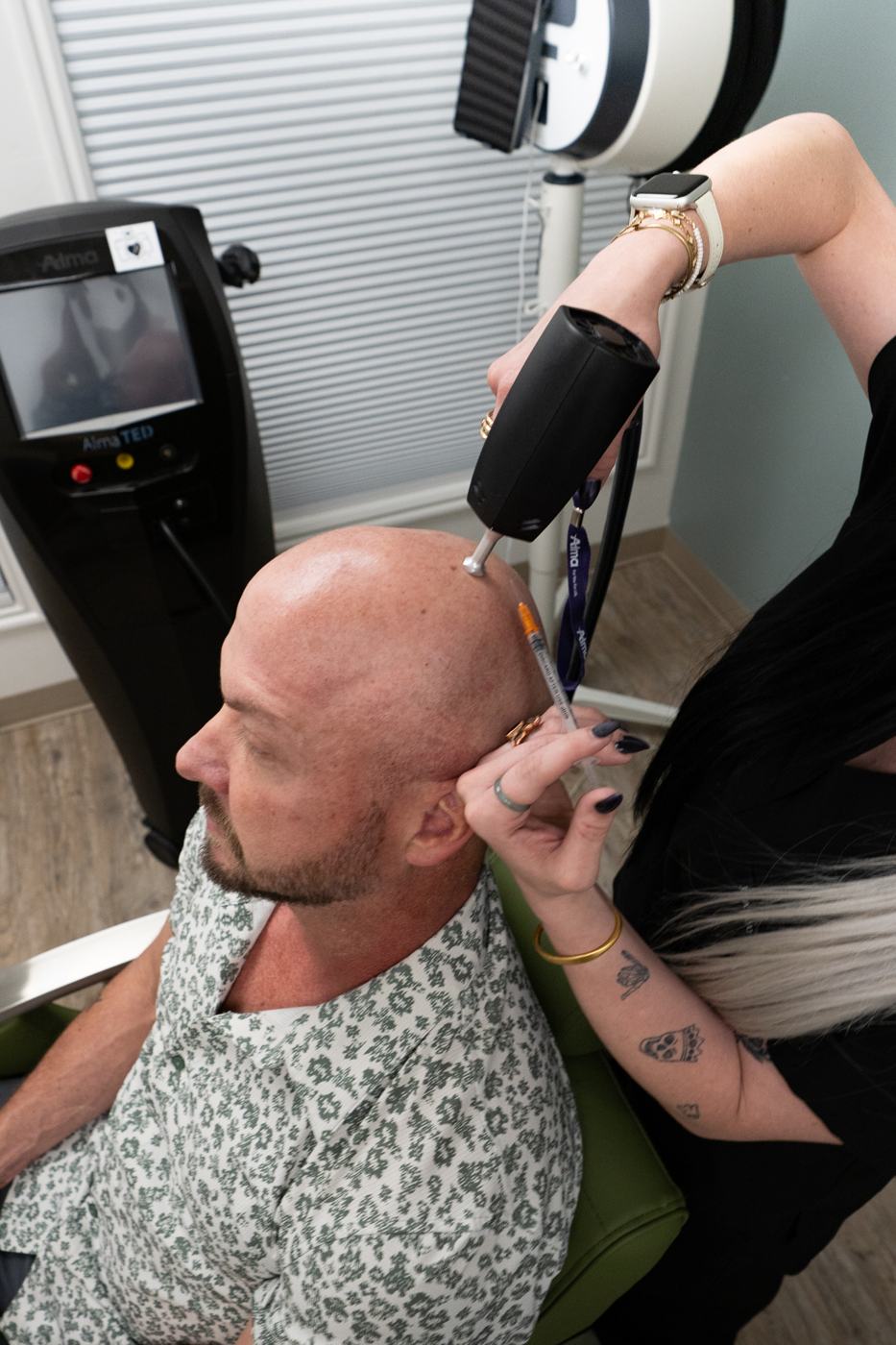
Here's how it works: TED uses ultrasound and air pressure to gently open tiny pathways in the scalp, then delivers a hair growth serum directly to the follicles. There are no needles, no blood draws, and no downtime, which makes it a popular alternative to treatments like PRP.
Most people complete a series of treatments, and studies have shown improvements in hair density and less shedding. TED tends to work best for people in the early stages of thinning, and it works even better when we've also addressed the root cause.
Set Realistic Expectations
Hair grows slowly, so patience matters. It usually takes at least a few months to see a difference with any treatment. And for hormonal or genetic thinning, ongoing maintenance is often needed to keep your results.
"Hair loss can feel so personal, and I've seen how much it affects a woman's confidence. Too often it gets written off as just getting older. But thinning hair is often your body telling you something, like low iron, a thyroid issue, or a hormone shift. When we find the cause, we can do something about it."

The Bottom Line
Thinning hair in women is common, but it's not something you just have to accept. Hormones, thyroid problems, low iron, stress, and rapid weight loss can all play a role, and the right treatment starts with finding the real cause. Learn more about hair loss care at Abbott, or book a consultation and let's get to the root of what's happening.
Sources
- Chaikittisilpa et al., female pattern hair loss in postmenopausal women, Menopause, 2022
- Female pattern hair loss, CMAJ, 2026
- Sodhi et al., risk of hair loss with semaglutide for weight loss, 2025
- Practical Dermatology: the new era of device-based hair restoration
Frequently Asked Questions
Why is my hair thinning?
Common causes in women include hormone changes, thyroid problems, low iron, stress or illness, rapid weight loss, and genetics. Often, more than one factor is involved.
Can low iron cause hair loss?
Yes. Low iron stores are a common contributor to shedding in women, and correcting them can help hair recover.
Does TED hair restoration work?
TED is an FDA-cleared, needle-free treatment, and early studies have shown improvements in hair density and shedding. Research is still limited and results vary, but it tends to work best in early thinning and alongside treating the root cause.
How long does it take to see results?
Hair grows slowly, so most treatments take at least a few months to show a difference.
Questions About Your Own Situation?
Start with a consultation and the right testing. We'll talk through your history and your options.
This page is for general information and does not constitute medical advice. Treatment recommendations are individualized and confirmed at your consultation. — Abbott Health & Wellness, 45 North State Street, Salina, UT 84654.