Two women step on the scale. Both weigh 150 pounds. On paper, they look identical.
But one has strong, healthy muscle and low body fat. The other is carrying hidden fat deep around her organs, the kind tied to diabetes and heart disease. The scale can't tell them apart. Neither can BMI.
This isn't rare. In a Mayo Clinic study of more than 2,000 adults with a "normal" BMI, 61% actually had high body fat along with early warning signs for heart and metabolic problems. Researchers call it "normal weight obesity," and most people living with it have no idea.
That's why we don't just rely on the number your scale tells you.
Key Takeaways
- A Seca scan measures body fat, skeletal muscle, visceral fat, body water and phase angle in about a minute, using a painless electrical signal.
- Visceral fat, the hidden fat around your organs, is tied to diabetes and heart disease, and it doesn't show on a scale.
- On a GLP-1 medication, a scan can catch muscle loss early so your protein, strength training or dosing can be adjusted.
- In our weight loss program, patients are scanned about every 60 days.
What Is a Seca Body Composition Scan?
Our Seca scanner looks like a high-tech scale with handrails. You stand barefoot on the platform, hold the handles, and in under a minute, it maps what your body is actually made of.
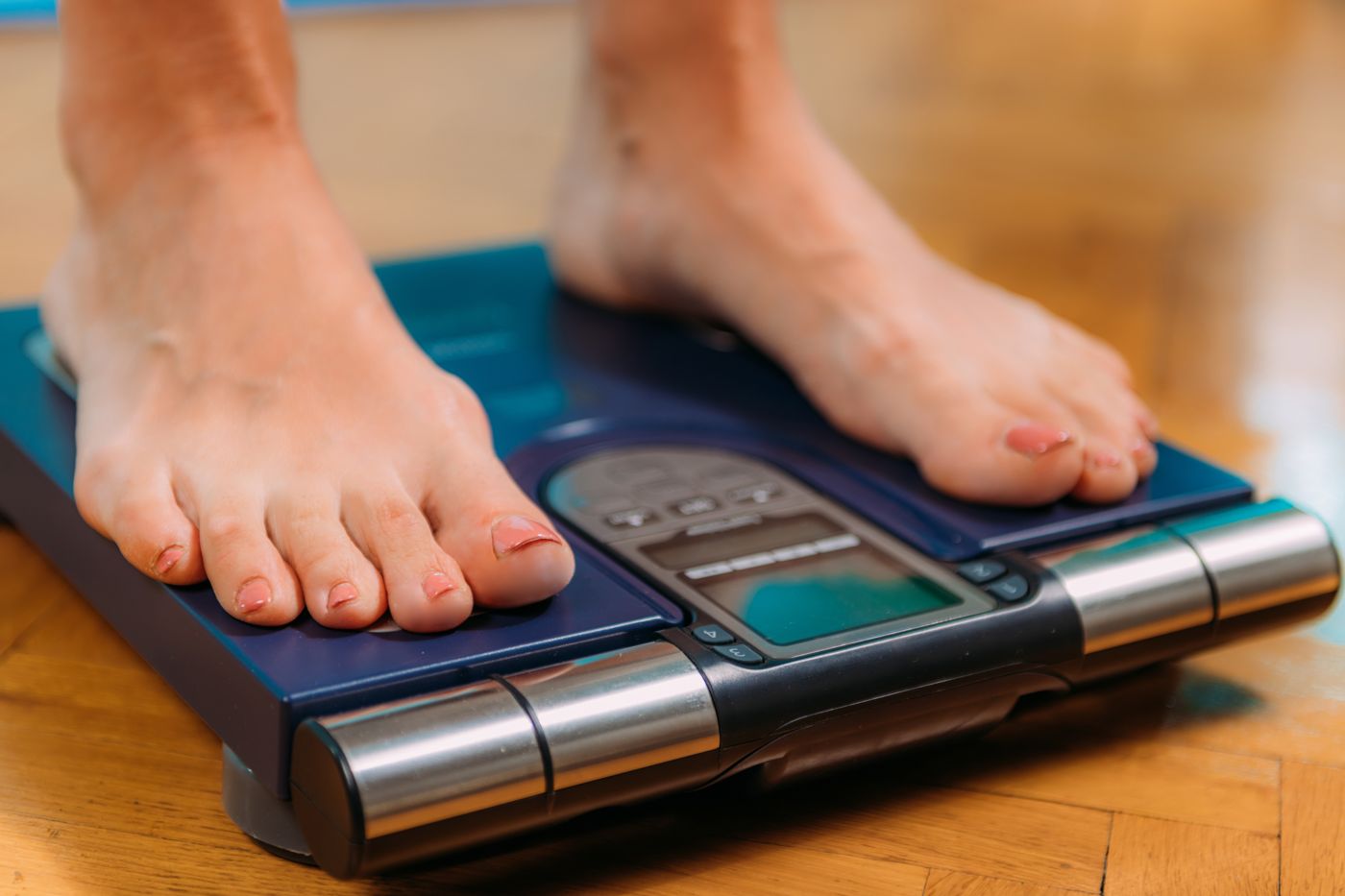
It works using a technology called bioelectrical impedance analysis, or BIA. A tiny, painless electrical signal travels through your body. You won't feel a thing. Because muscle holds a lot of water, the signal moves through it easily. Fat slows it down. By measuring how the signal travels, the scanner can tell how much of you is muscle, fat, and water.
Here's what makes Seca different from the smart scale in your bathroom: it's a medical-grade device that has been tested against the gold standards in body composition research, including whole-body MRI for muscle and the four-compartment model, one of the most accurate methods for measuring fat. According to Seca, its results match those reference methods with about 97% to 98% accuracy. Home scales simply aren't held to that standard.
What Your Seca Body Composition Scan Reveals
- Body fat. How much fat you're carrying, in pounds and as a percentage, so we know what you're actually losing.
- Skeletal muscle. The muscle that powers your strength, balance, and metabolism, measured for your whole body and for each arm, leg, and your core.
- Visceral fat. The hidden fat packed around your organs. This is the one we watch most closely.
- Body water. Whether you're well hydrated, which affects energy, recovery, and how you feel day to day.
- Phase angle. A lesser-known number that reflects the health and strength of your cells. Think of it as a snapshot of your overall vitality.
Why Visceral Fat Matters So Much
Not all fat is created equal. The soft fat you can pinch is mostly harmless. Visceral fat, buried deep in your belly, is a different story. It's metabolically active, it fuels inflammation, and it sends fat straight to your liver.
The risk is especially important for women. In a study of more than 325,000 people, researchers found that adding just one extra kilogram (about 2 pounds) of visceral fat raised a woman's risk of type 2 diabetes more than seven times. For men, the same amount roughly doubled it.
You can't see visceral fat in the mirror, and the scale won't show it. Your scan will. If belly fat is your concern, see our page on belly fat.
Why a Body Composition Scan Matters So Much on a GLP-1
Semaglutide and tirzepatide are incredibly effective. But when weight comes off quickly, some of it can come from muscle, not just fat.
That matters because muscle is your metabolism's engine. Lose too much of it, and you may feel weaker, burn fewer calories at rest, and find it easier to regain weight later.
The scale can't warn you. It might say you're down 20 pounds and celebrating, while your scan shows you've lost more muscle than we'd like. That's why patients in our weight loss program get a scan about every 60 days. It lets us:
- Catch muscle loss early and adjust your protein, strength training, or dosing before it becomes a problem
- Prove progress the scale misses, like when you're losing fat and building muscle at the same time, so your weight barely moves
- Track visceral fat as it drops, one of the most meaningful health wins of all
- Keep you motivated with real numbers that show your body changing
Some of the most encouraging moments in our office happen when a patient is frustrated with a stalled scale, and the scan shows they've lost pounds of fat and gained muscle. That's real progress. Learn more in our guide to muscle loss on GLP-1 medications or what to do when your weight loss stalls on semaglutide. You can also read about our semaglutide and tirzepatide programs.
How to Get the Most Accurate Results
Because the scan measures water as it moves through your body, a few simple habits keep your numbers consistent from visit to visit:
- Avoid intense exercise the day of your scan
- Drink water normally, without overloading right before
- Use the restroom just before your scan
- Try to schedule scans around the same time of day
Good to know: The scan isn't recommended for people with pacemakers or other implanted electronic devices, or during pregnancy. Let us know if either applies to you.
"I've watched so many patients judge their entire worth by a number on the scale. The scan changes that conversation. When someone sees they've lost real fat, protected their muscle, and lowered the visceral fat that puts their health at risk, the scale stops being the boss."

The Bottom Line
Your weight is just one number, and it leaves out the details that matter most. A Seca body composition scan shows how much fat, muscle, and hidden visceral fat you're carrying, so your plan is built around what's really happening in your body. If you're starting a weight loss journey or want to know where you truly stand, book a consultation and we'll build your plan around your results.
Sources
- Romero-Corral et al., normal weight obesity, Mayo Clinic, 2008
- Uppsala University: women's deep belly fat more strongly linked to diabetes and heart disease, Nature Medicine, 2019
- Seca mBCA validation studies
Frequently Asked Questions
What does a Seca body composition scan measure?
It measures body fat, skeletal muscle, visceral fat, body water, and phase angle, a marker of cellular health. It also breaks down muscle by arms, legs, and core.
Is a body composition scan better than a scale or BMI?
Yes, for understanding your health. A scale and BMI only show total weight, so they can't tell fat from muscle. A body composition scan shows what your weight is made of.
How accurate is the Seca scan?
The Seca scanner is a medical-grade device validated against whole-body MRI and the four-compartment model, two of the most accurate methods in body composition research.
How often should I get a body composition scan?
In our weight loss program, we repeat scans about every 60 days so we can catch muscle loss early and adjust your plan.
Does a body composition scan hurt?
Not at all. It uses a tiny electrical signal you can't feel and takes about a minute.
Questions About Your Own Situation?
Start with a consultation and the right testing. We'll talk through your history and your options.
This page is for general information and does not constitute medical advice. Treatment recommendations are individualized and confirmed at your consultation. — Abbott Health & Wellness, 45 North State Street, Salina, UT 84654.