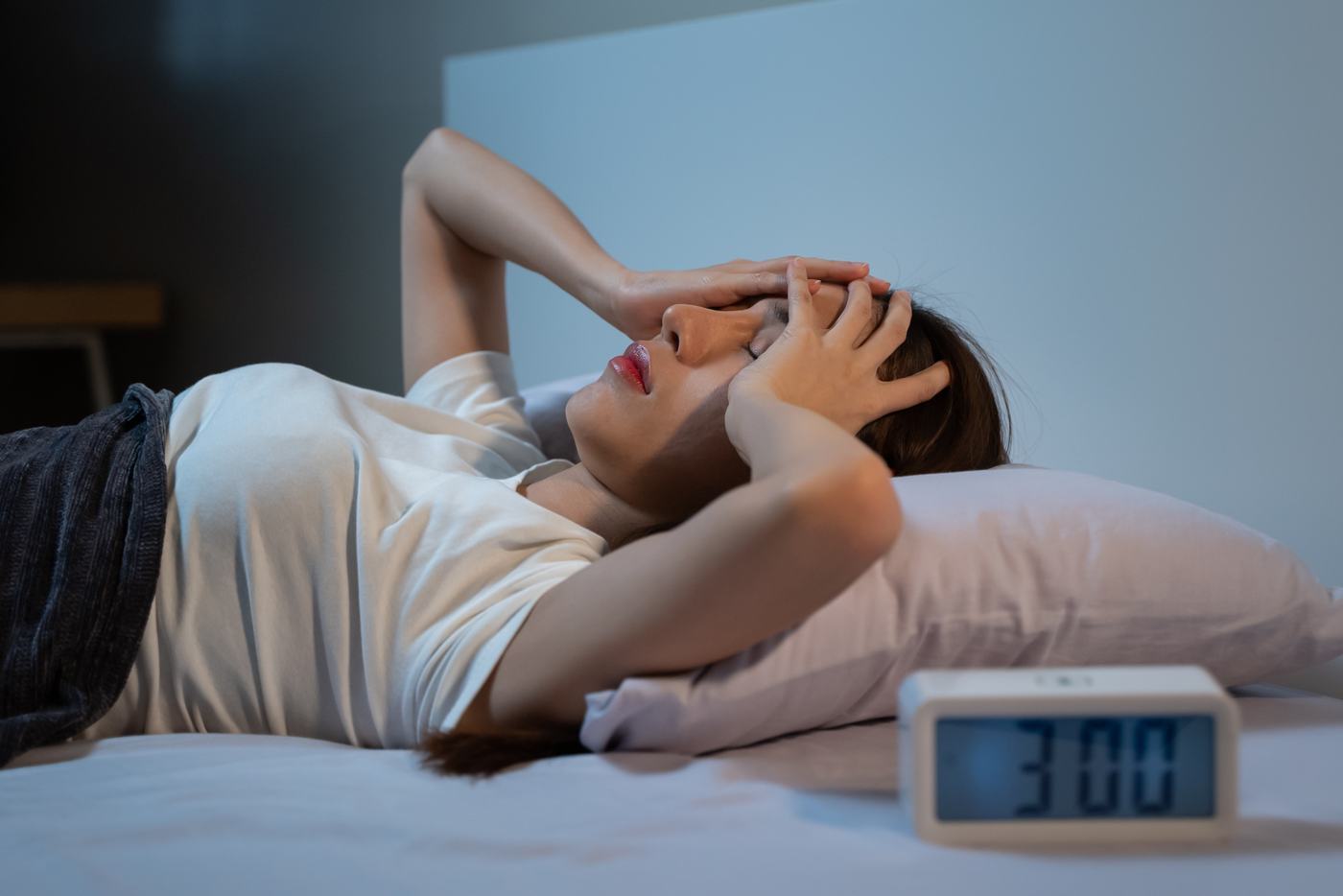
It's 3 a.m. again. You're wide awake, your mind is racing, and maybe you're kicking off the covers because you're suddenly hot. You used to sleep like a rock. Now a full night of rest feels like a distant memory.
If that sounds familiar, you're in good company. Research shows that up to 47% of women in perimenopause and as many as 60% after menopause struggle with sleep.
Most women blame stress, kids, or getting older. But there's a hormone that often gets overlooked in this story, and it might be the missing piece: progesterone.
Key Takeaways
- Progesterone has a natural calming effect on the brain, and it often starts to decline years before periods stop.
- Oral progesterone is converted by the liver into allopregnanolone, which acts on the same calming GABA receptors targeted by many sleep and anti-anxiety medications.
- In a randomized trial of 189 perimenopausal women, oral progesterone at bedtime for three months significantly improved sleep quality.
- Oral progesterone at bedtime is the form best linked to better sleep. It isn't right for everyone, so we review your full history first.
Meet Your "Calming Hormone"
Progesterone is best known for its role in your menstrual cycle and pregnancy. But it does a lot more than that. It also has a natural calming effect on your brain, which is why it's often called the "calming hormone" or the "happy hormone."
Your body makes most of its progesterone after you ovulate. As you move into your late 30s and 40s, ovulation becomes less regular. Fewer ovulations mean less progesterone, and that decline often starts years before your periods actually stop.
When progesterone drops, many women notice:
- Trouble falling or staying asleep
- More anxiety or feeling on edge
- Irritability and mood swings
- Night sweats
- Heavier or more irregular periods
Sound familiar? These are some of the earliest signs of perimenopause.
Perimenopause Can Start Earlier Than You Think
Perimenopause is the transition leading up to menopause, which is officially reached after 12 months in a row without a period. Many women assume it's something that happens in their 50s, right before periods stop. In reality, it usually starts in the mid-40s, and for some women it begins as early as the mid-30s. It lasts about four years on average, but it can stretch closer to a decade. See our guide to menopause vs. perimenopause for more.
Progesterone is often one of the first hormones to shift. Because it depends on ovulation, it can start dropping while your periods still look completely normal. Estrogen, on the other hand, tends to swing up and down unpredictably for years before it finally falls.
That mix of lower progesterone and fluctuating estrogen is why so many women in their late 30s and 40s suddenly struggle with sleep, anxiety, and heavier periods, without ever connecting it to their hormones.
How Progesterone Helps You Sleep
Here's the fascinating part. When you take progesterone by mouth, your liver converts some of it into a compound called allopregnanolone. That compound works on the same calming brain receptors, called GABA receptors, that many anti-anxiety and sleep medications target.
In other words, your body has its own built-in way to quiet a racing mind. Progesterone helps support it.
What the Research Shows
- Better sleep in perimenopause. In a randomized trial of 189 women in perimenopause, those who took oral progesterone at bedtime for three months reported significantly better sleep quality.
- Less time awake at night. In a small study of postmenopausal women, progesterone reduced the time spent awake during the night, measured with brain wave monitoring, without making them groggy or foggy the next day.
The research is still growing, but the results are encouraging, especially for women who want help with sleep and have other reasons to take progesterone.
Why Form Matters
Because that sleep-supporting compound is made largely in the liver, oral progesterone taken at bedtime is the form best linked to better sleep. Progesterone creams may help with sleep as well by raising your progesterone levels, but because they skip the liver, they likely don't offer as much help with sleep comparatively. Learn more about the different forms in Bioidentical Hormone Replacement.
More Than Sleep: Mood and Anxiety
Because progesterone works on the brain's calming system, many women notice benefits beyond sleep. Some feel less anxious, less irritable, and more like themselves. In the perimenopause trial above, progesterone improved how much symptoms interfered with daily life, without increasing depression.
That said, everyone responds differently. A small number of women actually feel moodier on progesterone, which is one reason close follow-up matters.
Possible Side Effects
Progesterone is generally well tolerated. The most common side effects include:
- Drowsiness or dizziness, which is why we have you take it at bedtime
- Breast tenderness
- Bloating
- Spotting or changes in your period
- Mood changes in some women
Good to know: Some brand-name progesterone capsules contain peanut oil, so let us know if you have a peanut allergy.
Who Might Benefit
Progesterone may be worth discussing if you:
- Are in perimenopause and struggling with sleep, night sweats, or anxiety
- Are postmenopausal and taking estrogen while still having your uterus
- Have mood or sleep changes that started in your late 30s or 40s
It may not be right for you if you have a history of certain cancers, blood clots, liver disease, or unexplained vaginal bleeding. We'll review your full history before starting.
How We Approach Progesterone at Abbott
Poor sleep rarely has just one cause, so we don't assume it's all hormones.
- We look at the full picture. Thyroid, iron, blood sugar, stress, and sleep habits can all affect how you sleep. Read how we approach root causes in What Is Functional Medicine?.
- We check your hormones. Labs and your symptom history help us understand where you are in your hormonal journey. See what blood tests to get before starting hormone therapy.
- We choose the right form and dose. For sleep, that's usually oral micronized progesterone at bedtime. If you also need estrogen or testosterone, we'll build a plan that fits it all together. Learn more in Bioidentical Hormone Replacement.
- We follow up. Most women notice changes within a few weeks to a few months. We check in on your sleep, mood, and any side effects, then adjust as needed.
We'll also talk about the basics that make any treatment work better, like a consistent bedtime, limiting screens at night, and managing stress.
"So many women have told me they haven't slept well in years and assumed it was just part of getting older. Sleep affects everything, from your mood to your weight to your patience with the people you love. For some women, progesterone is the piece that finally helps them rest and, in turn, start feeling like themselves again."

The Bottom Line
If you're waking at 3 a.m., feeling more anxious, or struggling with night sweats in your late 30s, 40s, or beyond, falling progesterone may be part of the reason. Oral progesterone taken at bedtime has been shown to improve sleep quality for many women, and it may help with mood and anxiety too. Learn more about perimenopause and menopause care and our hormone therapy, or book a consultation and we'll look at the full picture of what's keeping you up at night.
Sources
- Prior et al., oral micronized progesterone for perimenopausal night sweats and sleep, Scientific Reports, 2023
- Schüssler et al., progesterone and sleep in postmenopausal women, Psychoneuroendocrinology, 2008
- Kravitz and Joffe, sleep during the perimenopause: a SWAN story, 2011
- Cleveland Clinic: perimenopause
Frequently Asked Questions
Does progesterone help you sleep?
For many women, yes. Oral progesterone is converted into a compound that works on the brain's calming receptors. In a randomized trial of perimenopausal women, those taking progesterone at bedtime reported significantly better sleep quality than those on placebo.
When should I take progesterone for sleep?
Oral progesterone is usually taken at bedtime, since it can cause drowsiness.
Does progesterone cream help with sleep?
The sleep benefit is mostly tied to oral progesterone, because the calming compound is made largely in the liver. Creams skip that step, so they likely don't offer the same effect.
Can progesterone help with anxiety?
Many women feel calmer on progesterone because of its effects on the brain's calming system. Everyone responds differently, so we monitor how you feel.
Questions About Your Own Situation?
Start with a consultation and the right testing. We'll talk through your history and your options.
This page is for general information and does not constitute medical advice. Treatment recommendations are individualized and confirmed at your consultation. — Abbott Health & Wellness, 45 North State Street, Salina, UT 84654.